EcoFlow DELTA 2 Max Review: Worth It? (November 2026)
The EcoFlow DELTA 2 Max is a strong fit for expandable home backup because it combines a 2048Wh LiFePO4 battery, 2400W output and capacity expansion up to 6kWh. Choose the DELTA 3 Max for faster stated charging, or the RIVER 2 Max for lighter portable power.
On this page (8 sections)
- What does the EcoFlow DELTA 2 Max offer?
- Is the DELTA 2 Max good for home backup?
- How much backup capacity does 2048Wh provide?
- How does the DELTA 2 Max compare with the DELTA 3 Max?
- How does the DELTA 2 Max compare with the RIVER 2 Max?
- How should you charge and use the DELTA 2 Max?
- What are the main trade-offs?
- How should you choose between these EcoFlow stations?
The EcoFlow DELTA 2 Max is built for expandable backup power, with a 2048Wh LiFePO4 battery, 2400W output and capacity expansion up to 6kWh. It suits home essentials, camping and longer outages better than a small power station, but its size and weight make it less convenient to carry.
This review looks at capacity, output, charging options and expansion in practical terms. We also compare it with two EcoFlow alternatives so the differences are clear.
The DELTA 2 Max sits in the middle of that comparison. It offers far more energy than a compact unit, yet it remains a single cabinet you can place in a spare room, garage or utility area.
For home backup, the base 2048Wh battery is the starting point rather than the end of the story. You can plan around essential loads first, then decide later whether extra batteries make sense.
For camping and RV use, the higher output matters in a different way. Larger appliances can run without stepping up to a much bigger system, provided their starting demand stays within the stated limits.
The main trade-off is movement. A unit of this size is easier to set in one place and leave ready than to carry between rooms or vehicles every day.
That is why the comparison matters. The DELTA 3 Max charges faster according to its stated figures, while the RIVER 2 Max is much smaller and lighter.
Each model suits a different pattern of use. The right choice depends on whether you value expansion, recharge speed or easy carrying most.
Read the sections below with your own needs in mind. Note which appliances you want to run, how long an outage might last and where the station will live.
What does the EcoFlow DELTA 2 Max offer?
The DELTA 2 Max combines 2048Wh of capacity with 2400W output and a LiFePO4 battery. For a comparison of the earlier models, see EcoFlow DELTA vs DELTA 2.
EcoFlow also gives it 3400W X-Boost output, up to 6kWh of expandable capacity and multiple charging options.
EF ECOFLOW DELTA 3 Max Portable Power: Best for faster top-ups

- 2048Wh LFP battery
- 2400W output
- 3400W X-Boost output
- 0–80% charging in 1.13 hours
A high-output alternative with a 2048Wh LFP battery, 0–80% charging in 1.13 hours and a stated 10ms transfer time.
Pros
- Fast stated 0–80% charging
- 3400W X-Boost output
- 10ms transfer time
- App control
Cons
- Larger than the RIVER 2 Max
- Solar panel is optional
The DELTA 3 Max is the stronger alternative when recharge speed matters. Its stated 0–80% charging time is 1.13 hours, and it has a 2048Wh LFP battery with 2400W output.
EF ECOFLOW Portable Power Station DELTA: Best for expandable home backup

- 2048Wh LiFePO4 battery
- 2400W output
- Expandable to 6kWh
- 15 outlets
The DELTA 2 Max suits longer outages when 2048Wh is only the starting point. Its capacity can expand to 6kWh with up to 2 extra batteries.
Pros
- Capacity expansion to 6kWh
- 30 dB stated noise level at low input and output
- Multiple charging options
- 15 outlets
Cons
- Heavier than the RIVER 2 Max
- Extra batteries are separate
The DELTA 2 Max remains the best fit here for buyers who want capacity expansion. It can use up to 2 extra solar-powered batteries to reach 6kWh, which gives you more planning room for longer outages.
EF ECOFLOW Portable Power Station River: Best for lighter portable power
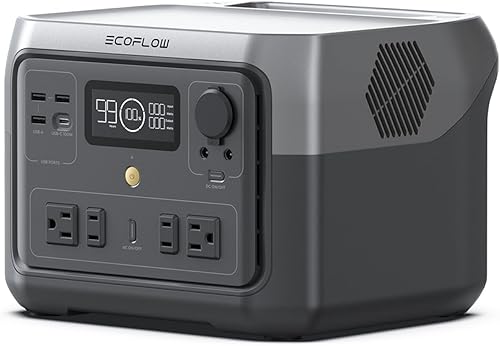
- 499Wh LiFePO4 battery
- 1000W output
- 1-hour AC recharge
- 13.3 lb weight
The RIVER 2 Max 500 is easier to carry and better suited to smaller loads, short trips and essential devices than extended household backup.
Pros
- 13.3 lb weight
- 1-hour AC recharge
- 1000W output
- 220W solar charging
Cons
- Much less capacity than the DELTA models
- Not intended for the same long-outage loads
The RIVER 2 Max 500 fills a different role. Its 499Wh battery and 1000W output suit smaller loads, short trips and lighter carry needs.
Is the DELTA 2 Max good for home backup?
The DELTA 2 Max is a good home-backup choice when you need more than a small battery pack but don't want a fuel-burning generator. Its 2048Wh capacity can support a planned group of essential devices, while its 2400W output covers many household loads.
Make a list before an outage. Include the device, its running watts and how long you want it powered.
A refrigerator, modem, lights and medical equipment can create a different demand from a laptop and a few phone chargers.
X-Boost reaches 3400W for compatible high-wattage appliances, but you should still check each appliance's running and starting demand. X-Boost does not mean every appliance will work in every situation.
For a broader explanation of battery size, output and inverter limits, use this portable power station buying guide. It helps separate capacity from the wattage a device needs at one moment.
How much backup capacity does 2048Wh provide?
A 2048Wh battery gives you a large starting point, but usable runtime depends on load and conversion losses. A simple planning estimate is battery watt-hours divided by appliance watts, followed by a reduction for the power station's own use.
For example, a 100W load uses about 100Wh per hour before losses. A 500W load uses about 500Wh per hour, so the same battery reaches its limit much sooner.
That basic maths helps you compare devices fairly. It also shows why two households with the same station can get very different results during an outage.
Don't treat the capacity number as a promise of exact hours. Refrigerators cycle, chargers change their draw and heating appliances can use substantial power while running.
A fridge may not draw its full rated power all the time, but its startup demand can still matter. Lights, fans and phone chargers are usually easier to plan because their draw is more steady.
It helps to sort loads into groups before a power cut. Put critical items first, then add comfort items only if the maths leaves room to spare.
Leave a reserve as well. Running the battery down to the last percent leaves no margin if an outage lasts longer than expected.
The DELTA 2 Max becomes more useful for longer outages because it can expand from 2kWh to 6kWh. Extra batteries add cost and storage needs, so buy into that system only if your backup plan needs more than the base capacity.
Expansion also changes how you plan. You do not need to solve every future scenario now, but you should check that extra batteries would fit the space you have.
Think about placement early. Extra batteries need safe, dry storage and cable routes that will not be tripped over or damaged.
Solar input can also affect long outages, since it may add energy during the day. Its value depends on sunlight, panel setup and how quickly you use the power.
For short interruptions, the base capacity may be enough for a focused set of essentials. For overnight or multi-day planning, expansion becomes more attractive.
Start with realistic loads and honest time estimates. Then decide whether 2048Wh is sufficient or whether the expansion path is worth planning for.
How does the DELTA 2 Max compare with the DELTA 3 Max?
The DELTA 3 Max is the better choice for faster stated charging and a 10ms transfer time. For setup steps on the DELTA 3, see our EcoFlow DELTA 3 guide.
It has the same 2048Wh battery size and 2400W output shown here, plus 3400W X-Boost output.
The DELTA 2 Max is the better choice when expandable capacity is central to your plan. Its stated expansion range reaches 6kWh with up to 2 extra batteries.
The DELTA 3 Max also lists app control, an ultra-quiet design and a lighter durable build using aluminum and plastic. Its included components are an AC charging cable, the power station and manuals with a warranty card.
Read the EcoFlow DELTA 3 Max review if charging speed and transfer behavior matter more than adding storage later.
How does the DELTA 2 Max compare with the RIVER 2 Max?
The RIVER 2 Max 500 is the easier unit to carry because it weighs 13.3 lb and measures 10.6 x 10.2 x 7.7 in. It has a 499Wh LiFePO4 battery, 1000W output and a stated 1-hour AC recharge.
The DELTA 2 Max is much better suited to longer backup because its battery is 2048Wh. Its 2400W output also gives you more room for larger household loads than the RIVER 2 Max's 1000W output.
Choose the RIVER 2 Max for camping, small electronics and essential devices where portability matters most. Choose the DELTA 2 Max when you need more energy between charges or want the option to expand capacity.
For a clearer model split, see EcoFlow DELTA vs RIVER. The choice is mainly about capacity, output and how often you'll move the unit.
How should you charge and use the DELTA 2 Max?
The DELTA 2 Max supports AC wall charging, solar charging and car charging. Choose the method that fits your routine, then place the unit where its cables can reach the source without creating a trip hazard.
Use AC charging when you need a predictable recharge before an outage. A wall outlet gives you the most straightforward way to bring the battery back up in good time.
That makes AC charging the sensible option for seasonal readiness. Charging before a storm or a planned outage is easier than trying to recover power once the grid is already down.
Solar charging can help during an extended power cut, but the recharge time depends on available sunlight and the solar input setup. Cloudy weather, short days and shaded panels will all slow things down.
Car charging adds flexibility on the road, especially when you are travelling between campsites or work sites. Plan the cable route in advance so the unit stays secure during travel.
The battery management system monitors voltage, current and temperature during charging and discharging. Those checks support safe operation, but they do not replace sensible care by the owner.
Keep the power station dry, follow the operating guidance and avoid blocking areas needed for ventilation. Heat, moisture and blocked airflow can all make daily use harder than it needs to be.
Set up your loads before an emergency so you know which devices matter most. Test the layout in calm conditions, check that cables reach, and note which outlets you plan to use.
That practice also helps you learn the controls. You will be far more confident during an outage if you have already switched the unit on, connected a lamp or charger and checked the display.
If you're new to the DELTA controls, follow this guide to using an EcoFlow DELTA 2. It can walk you through the basics before you need them under pressure.
Store the station where you can reach it quickly, but not where it will be knocked or covered. A clear space, a tidy cable route and a charged battery make the whole system easier to trust.
Take time to check the charge level every so often, even when there is no outage. Readiness is mostly habit, and a station that is kept charged is ready when the lights go out.
What are the main trade-offs?
The DELTA 2 Max's biggest advantage is expandable storage without moving to a fuel generator. The 2048Wh base battery and 2400W output cover a broad range of backup plans, while the 6kWh expansion ceiling supports longer interruptions.
Its main drawback is portability compared with the RIVER 2 Max. The DELTA 2 Max measures 12.2 x 9.7 x 20 in and weighs 23 kg, so plan where it will stay instead of treating it like a small travel battery.
The DELTA 3 Max is a close alternative with faster stated 0–80% charging and a 10ms transfer time. The RIVER 2 Max costs you capacity and output, but it is far easier to move.
EcoFlow's newer DELTA 3 Max Plus review may help if you are comparing the broader DELTA range before deciding.
How should you choose between these EcoFlow stations?
Pick the DELTA 2 Max if you want 2048Wh now and the option to expand to 6kWh later. It is the most direct fit for planned home backup, longer outages and higher energy needs.
Pick the DELTA 3 Max if faster stated charging, app control and a 10ms transfer time matter more than the expansion details shown for the DELTA 2 Max. Its 2048Wh battery keeps it in the same broad capacity class.
Pick the RIVER 2 Max 500 if you need a lighter unit for camping, small appliances and basic electronics. Its 499Wh battery is much smaller, but its 13.3 lb weight makes regular carrying easier.
Before ordering, measure the storage spot and plan the cable route. For smaller setups, compare these options with the best small portable power stations.
The EcoFlow DELTA 2 Max is the best match for expandable battery storage and longer outage planning. For a whole-home system with much greater capacity, see the EcoFlow DELTA Pro Ultra review.
Its capacity, output and expansion path make it more versatile than the RIVER 2 Max, while the DELTA 3 Max is the better pick when fast stated charging is your priority.
Our score weighs specs, features and buyer feedback against the needs of this review. Always compare the appliance's running and starting watts with the station's output before depending on it for critical equipment.
Frequently asked questions
Is the EcoFlow DELTA 2 Max worth it?
The EcoFlow DELTA 2 Max makes sense when you need a 2048Wh LiFePO4 battery, 2400W output and room to expand capacity to 6kWh. It is a better match for longer outages and household backup than the 499Wh RIVER 2 Max, while the DELTA 3 Max offers faster stated charging.
How long will the EcoFlow DELTA 2 Max run appliances?
Runtime depends on the appliance wattage, battery charge and conversion losses. The DELTA 2 Max has a 2048Wh battery, so a device using 200W will draw far less energy than one using 1,000W; check the appliance label and leave reserve capacity for charging losses.
Can the EcoFlow DELTA 2 Max power a refrigerator?
The DELTA 2 Max has 2400W output and up to 3400W through X-Boost, so it has the stated output range for many household devices. Refrigerator startup demand varies, however, so compare the refrigerator's running and starting watts before relying on it during an outage.
What is the difference between the DELTA 2 Max and RIVER 2 Max?
The DELTA 2 Max has a 2048Wh battery, 2400W output and expansion up to 6kWh, while the RIVER 2 Max 500 has 499Wh and 1000W output. Choose the DELTA for longer backup and heavier loads, or the RIVER for a lighter 13.3 lb unit.