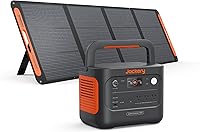
Portable Power Station vs Inverter: Which Should You Choose? (November 2026)
Choose a portable power station for simple battery backup, or choose an inverter when you already have a suitable 12V battery source. The right option depends on runtime, portability, outlets and how much setup you want.
On this page (10 sections)
- Portable power station vs inverter: what is the main difference?
- Which option is easier to set up?
- How do capacity and runtime compare?
- Which is better for camping and road trips?
- When is a car inverter the better choice?
- Which option is better for emergency backup?
- How does solar charging change the choice?
- What should you check before buying?
- How should you use and care for either option?
- Portable power station vs inverter: which should you choose?
Choose a portable power station for built-in battery backup, or choose an inverter when you already have a suitable vehicle or battery source. That choice shapes how much setup you do before you can charge anything.
It also shapes where you can use power when you are away from home.
A portable power station vs inverter comparison is really about stored energy. One option keeps power inside a self contained case.
The other option needs power from somewhere else before it can help.
A portable power station combines a battery, an inverter and outlets in one case. You charge the battery in advance, then connect a device when you need it.
That simple order suits people who want fewer cables and fewer separate parts to carry.
An inverter mainly changes DC power into AC power. It does not store energy on its own.
A vehicle or a separate battery must supply the DC power first. Without that source, the inverter has nothing to convert.
This comparison covers integrated battery stations and compact vehicle inverters. It looks at capacity, output, outlets, weight and setup.
It also notes the limits that matter in daily use.
This guide also explains where a solar generator fits. That term is often used for a portable power station with solar charging.
The panel is usually separate, so the setup can grow once you add solar gear.
For camping, the stored energy in a station can be useful away from a vehicle. For road trips, a car inverter can be a handy adapter when the vehicle is close by.
The right pick depends on your devices, your travel style and the runtime you expect.
Read the device labels before you decide. Check total wattage, port types and how long each item needs to run.
A small station may suit a laptop and phones, while a larger station or a different source may be needed for heavier loads.
Once you know your load, the rest follows more easily. You can match capacity to runtime, outlets to device types and weight to how far you plan to carry it.
That keeps the choice practical and avoids buying power you cannot actually use.
 Best for lightweight backup
Jackery Explorer 300 Portable Power Station
 Best for higher backup loads
Jackery Explorer 1000 v2 Portable Power Station
Portable power station vs inverter: what is the main difference?
A portable power station stores energy before you need it, while an inverter converts energy from another DC source. That difference affects setup, runtime and where you can use each option.
The Jackery Explorer 300 has a 292Wh battery, 300W rated output and 2 AC outlets. The Jackery Explorer 1000 v2 has a 1070Wh battery, 1500W output, a 3000W surge peak and 3 pure sine wave AC ports.
The BESTEK inverter provides 300W continuous output from an 11-17V source. The PiSFAU inverter provides 200W from a 12V vehicle power socket.
An inverter can be smaller and lighter because the battery sits elsewhere. The trade-off is that you must supply the DC source, manage its connection and account for the energy available from that source.
Which option is easier to set up?
A portable power station is usually easier to set up because the battery and outlets are already together. You charge the station, connect your device and monitor the available power.
The Explorer 300 includes an AC adapter, car charger cable and user guide. Its 300W rated output suits smaller electronics, but you should check each device's power needs before connecting it.
The Explorer 1000 v2 includes the power station and user manual. It has 3 AC ports, 2 USB-C ports, 1 USB-A port and 1 DC car port, so several device types can connect to the same unit.
An inverter needs a compatible DC source. The BESTEK model connects to an 11-17V vehicle source, while the PiSFAU model is for a 12V vehicle power socket.
Use an inverter only within its output limit. A vehicle connection also means the available runtime depends on the vehicle or battery source, not just the inverter's watt rating.
For a simple overview of how inverter sections work, read What Is a Power Inverter in a UPS? What Matters Most.
The same basic idea helps explain why an inverter and a battery station are not the same product.
How do capacity and runtime compare?
Choose capacity by the total wattage of your devices and how long you need them to run. Wattage describes the load, while watt-hours describe stored energy.
The Explorer 300 provides 292Wh. A 60W device would use energy faster than a 10W light, so the same station can last for different lengths of time depending on what you connect.
The Explorer 1000 v2 provides 1070Wh, giving it more stored energy for longer use or a larger collection of devices. Its 1500W output also gives it a higher load limit than the Explorer 300.
A car inverter does not have a fixed battery runtime by itself. The vehicle or separate battery supplies the energy, and the vehicle's operating conditions affect how long you can keep drawing power.
Do not use a watt rating as a promise that every device will work. Motors, heating elements and other loads can draw more power when starting, so check the device label and the inverter or station limits.
Which is better for camping and road trips?
A portable power station suits camping when you want stored energy away from the vehicle. A car inverter suits road trips when the vehicle is nearby and you mainly need charging access while traveling.
The Explorer 300 weighs 7.5 lb and has an integrated handle. Its 292Wh capacity and 300W rated output fit smaller electronics, cameras, laptops and similar loads within the power limit.
The Explorer 1000 v2 weighs 23.8 lb and has a foldable handle. Its 1070Wh capacity and 1500W output make it a better fit when several devices or higher loads matter more than carrying weight.
For a broader look at sizing and features, see our Portable Power Stations: The Complete Buying Guide. If your main use is sleeping equipment away from a wall outlet, compare the options in Best Portable Power Stations for CPAP Machines.
When is a car inverter the better choice?
Choose a car inverter when your vehicle is the power source and you need a compact adapter for smaller electronics. It can be practical for charging during travel, but it cannot provide stored energy after the source is unavailable.
The BESTEK Power Inverter provides 300W continuous output, 2 AC outlets and 2 USB ports. Its input range is 11-17V, and its 32 in cigarette lighter plug supports vehicle use within that range.
The PiSFAU 200W Car Power Inverter has 2 AC outlets and 4 USB charging ports. It is designed for a 12V vehicle power socket and weighs 8.8 oz, making it the smaller option for basic charging.
Both inverters use modified sine wave output. Check the requirements of sensitive or specialized equipment before using a modified sine wave inverter.
Which option is better for emergency backup?
A portable power station is the more direct choice for short emergency backup because it stores energy before an outage. For another backup option, compare a portable power station vs UPS.
You can charge it in advance, then connect devices within its output limit.
The Explorer 300 can cover smaller electronics and has a 300W rated output. The Explorer 1000 v2 gives you 1070Wh and 1500W output, so it offers more capacity for longer use or higher-wattage devices.
A car inverter can help during an outage if your vehicle is available, but the vehicle becomes part of the power system. Keep the inverter within its limits, follow vehicle safety guidance and never use a vehicle in an enclosed space.
A portable power station is not the same as a whole-home backup system. It may keep selected devices running, but it does not automatically power household circuits.
For another backup comparison, read Portable Power Station vs Generator: Which Should You Choose?. A fuel generator and a battery station have different operating needs, noise concerns and energy sources.
How does solar charging change the choice?
Solar charging makes a portable power station easier to use away from an outlet, but the solar panel is a separate purchase for both Jackery stations here. A compatible panel can recharge the battery when sunlight and setup space are available.
The Explorer 300 can reach 80% capacity in about 2.8 hours with a 100W solar panel, or 80% in about 7.5 hours with a portable 40W panel. The panel is not included.
The Explorer 1000 v2 is compatible only with Jackery solar panels for solar charging. Its solar panel is not included, so plan for the extra equipment and charging time when comparing the complete setup.
An inverter alone is not a solar generator. You need a battery, solar charge control and a suitable connection plan before solar energy can become usable AC power.
Our comparison of Inverter Generator vs Solar Generator covers the difference between engine-based power and battery-based systems. You can also compare a station with the best Bluetti solar generator if brand and capacity choices are part of your search.
What should you check before buying?
Start with the device wattage, then check the battery capacity, output type, ports and charging method. The smallest product that meets your real load is easier to carry, while too little capacity can leave you without useful backup.
For a portable power station, check:
- Total wattage for the devices you plan to run.
- Battery capacity in watt-hours.
- Number and type of AC, USB and DC ports.
- Weight and handle design.
- Solar and vehicle charging options.
- Whether the solar panel is included.
For an inverter, check:
- The input voltage of the vehicle or battery source.
- Continuous output and peak output.
- AC outlet and USB port count.
- Output waveform.
- Cable length and connection method.
- Protection features and ventilation needs.
The BESTEK inverter has 300W continuous output and 700W instantaneous power. The PiSFAU model has 200W output, so neither is a substitute for the Explorer 1000 v2 when you need 1500W output.
How should you use and care for either option?
Keep every device within the rated output, maintain clear ventilation and follow the product manual for charging and storage. Good care starts with matching the load before you connect anything.
For a power station, charge it using the supported method and avoid blocking its vents during use. Keep cables organized so a connector is not pulled or bent while devices are running.
For a vehicle inverter, use the correct vehicle voltage and keep the unit ventilated. Do not connect high-power heaters, hair dryers or similar loads to the PiSFAU 200W model.
The Explorer 1000 v2 has a 30 dB quiet overnight charging mode and energy efficiency mode through the Jackery App. Emergency charging from 0% to 100% in 1 hour requires enabling that function in the app first.
Let the station or inverter cool if it becomes hot, and stop using it if protection features indicate overload or another fault. Never exceed the output limit to force a device to run.
Portable power station vs inverter: which should you choose?
Pick the Jackery Explorer 300 when you want a light 292Wh battery station for smaller devices. It suits laptops, phones, cameras and similar loads within its 300W rated output.
Its 7.5 lb weight and integrated handle make it easier to carry on short trips.
Pick the Jackery Explorer 1000 v2 when you need 1070Wh, 1500W output and more AC capacity. It has 3 pure sine wave AC ports, plus USB and DC options for mixed devices.
At 23.8 lb, it asks more from your arms, but it stores far more energy for longer use.
Choose the BESTEK Power Inverter when your vehicle is the source and 300W continuous output is enough. It offers 2 AC outlets and 2 USB ports in a compact aluminum housing.
It needs an 11-17V vehicle source and does not store energy by itself.
Choose the PiSFAU 200W Car Power Inverter for basic 12V vehicle charging with 2 AC outlets and 4 USB ports. At 8.8 oz, it is the smallest option here and suits phones, tablets and laptops on the road.
Its 200W limit keeps it in the small electronics lane.
The simple decision rule is this: choose a portable power station for stored, self-contained backup. Choose an inverter when you already have a suitable DC source and want a compact conversion tool.
That rule keeps runtime, setup and portability in focus.
For camping away from the vehicle, a battery station is often the cleaner fit. For daily driving with a vehicle nearby, an inverter may be all you need.
Match the source to the trip, not the other way around.
Before you buy, add up device wattage and check each product limit. Motors and heating items can draw extra power at start, so leave headroom.
Also confirm port types, cable reach and ventilation space for safe use.
For another close comparison, read Portable Power Station vs Solar Generator: What Is the Difference?. It helps clarify naming and setup before you commit to a panel or a larger station.
Frequently asked questions
Is a portable power station better than an inverter?
A portable power station is better when you want a built-in battery, AC outlets and a simple setup in one case. An inverter is better when you already have a suitable 12V vehicle or battery source and mainly need to convert DC power to AC.
Compare output, runtime and setup before choosing.
Can an inverter power a house during an outage?
A small car inverter cannot power a house by itself because it needs a vehicle or battery source and has a limited output. It may charge smaller electronics from a vehicle.
Household backup needs depend on the inverter size, battery bank, wiring and transfer equipment, so follow qualified electrical guidance.
What is the difference between a solar generator and an inverter?
A solar generator usually combines a battery, inverter, charging circuits and outlets in one portable unit. An inverter mainly changes DC power into AC power, so a separate battery or vehicle source is usually needed.
Our guide to portable power station vs solar generator explains the naming difference.
Is a portable power station worth it for camping?
A portable power station can be useful for camping when you want stored energy for electronics, lights or other devices without running an engine. The Jackery Explorer 300 weighs 7.5 lb and has 292Wh, while the Explorer 1000 v2 has 1070Wh and weighs 23.8 lb.
Match capacity to your load.