Inverter Generator vs Solar Generator: Which Is Better? (November 2026)
Choose a solar generator for quiet, rechargeable power, or an inverter generator for longer fuel-based operation and higher sustained output. Your best choice depends on runtime, noise, charging access and the devices you need to run.
On this page (9 sections)
- Inverter generator vs solar generator: which is better?
- How do output and runtime compare?
- Which one is quieter?
- Which type is easier to use during a blackout?
- How do charging and refueling differ?
- Which products fit each use?
- How should you choose for camping?
- Which is better for home emergency backup?
- Final choice: inverter generator vs solar generator
Choose a solar generator for quiet, rechargeable power, or an inverter generator for longer fuel-based operation and higher sustained output. Inverter generator vs solar generator decisions come down to runtime, noise, charging access and the appliances you need to power.
An inverter generator uses a gasoline engine to make electricity. A solar generator is a battery power station that stores electricity and may recharge from solar panels, AC power or a vehicle connection.
The fuel option keeps making power while it has gasoline and is running outdoors. The battery option gives you stored power ready to use, then needs time to recharge before you can use that reserve again.
That basic split shapes almost every other choice in this comparison. Noise, care, weight and where you can safely run the unit all follow from whether it burns fuel or draws from a battery.
The right choice also depends on how much power you need at one time. A small battery station may suit phones, lights and networking equipment, while a gasoline generator may better fit larger loads or longer outages.
It also depends on how long you need that power to last. A battery reserve can feel simple for a short trip or a brief outage, but it runs down without refueling.
A gasoline unit can run for much longer when fuel is available. That makes it easier to plan for overnight use or for several heavy loads in a row.
Your home, campsite or RV also matters for safe setup. Battery power can be used close to the devices it serves, while a fuel engine needs outdoor space and clear airflow.
Charging or refueling access matters just as much as the headline output. You may have wall power at home, sun at a campsite, or stored gasoline ready before an outage.
The sections below match each type to common loads and settings. Use your own device list first, then check output, runtime and care against that list.
 Best for balanced emergency power
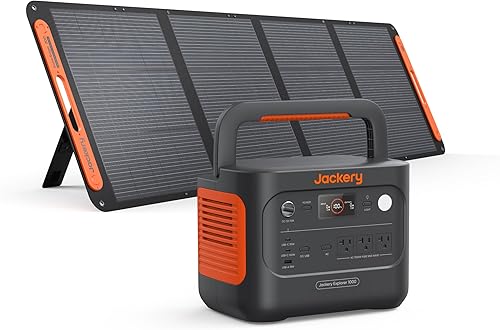
Jackery Solar Generator 1000 v2 and 200W Solar Panel
 Best for quiet gasoline power
WEN Super Quiet 2350-Watt Portable Inverter Generator
Inverter generator vs solar generator: which is better?
A solar generator is better for quiet, clean battery power, while an inverter generator is better when you need fuel-based runtime and higher sustained output. Neither type wins for every emergency or outdoor setup.
Battery systems are ready when charged. They don't need gasoline, engine oil or a warm-up period during use.
They also avoid exhaust at the point of operation, but you must plan around stored capacity and recharge time.
Gasoline inverter generators can keep producing power as long as you have suitable fuel and follow safe operating practices. They need outdoor placement because engine exhaust can be dangerous, and fuel storage adds another planning task.
For a wider look at battery systems, read our best portable power station buying guide. If you are comparing the device category itself with a separate inverter, see our portable power station vs inverter comparison.
How do output and runtime compare?
Inverter generators usually provide longer continuous operation, while solar generators provide a fixed battery reserve before recharging. Compare rated watts for ongoing loads and surge watts for devices that need extra power when starting.
The Jackery offers 1,500W AC output and a 1,070Wh capacity. That combination suits several smaller devices or selected larger appliances, but total runtime falls as the connected load rises.
The BLUETTI provides 600W continuous output and 288Wh capacity. Its power lifting mode reaches 1,500W for supported loads, but that does not turn the 288Wh battery into a large-capacity system.
The WEN provides 1,900 rated watts and 2,350 surge watts from gasoline. The Oxseryn offers 3,400 running watts and 4,400 peak watts, giving it the highest output in this comparison.
How much battery capacity do you need?
Battery capacity is measured in watt-hours. A 100W device running for 5 hours would use about 500Wh before accounting for conversion losses and the power station's own use.
That simple estimate is only a starting point. Motors, compressors and heating elements may draw more power at startup or cycle on and off, so check the appliance label and the power station's limits.
Which one is quieter?
Solar generators are quieter during battery use because they have no gasoline engine running. Inverter generators are quieter than many conventional generators, but the engine still creates sound and vibration.
The WEN is designed for quiet operation and weighs 39 lb. Its 2,350W surge output and 1,900W rated output make it a practical middle ground when you need gasoline power without choosing the largest unit.
The Oxseryn is an open-frame gasoline generator with a stated noise level under 72 dBA from 23 ft away. Its 56 lb body and higher output make it better suited to heavy backup loads than quiet indoor-adjacent use.
No fuel generator should run inside a home, garage or enclosed RV space. Keep it outdoors and follow the owner's instructions for placement, ventilation and connection.
Which type is easier to use during a blackout?
A charged solar generator is simpler for short blackouts because you connect devices directly to the battery system. A fuel generator requires safe outdoor setup, gasoline and engine operation.
A battery station can keep smaller devices running without refueling. The BLUETTI also includes a 10ms UPS function, which may help keep supported devices such as routers, laptops or CPAP machines powered through a sudden interruption.
The Jackery includes three pure sine wave AC ports, 2 USB-C ports, 1 USB-A port and 1 DC car port. Its listed uses include residential backup, camping and road trips.
The WEN includes two 120V receptacles, 1 12V DC receptacle and 2 USB ports. The Oxseryn includes 2 120V AC ports, 1 12V DC port and 1 RV port.
For a battery-focused setup, our solar generator guide explains how capacity, output and recharge options fit together. RV shoppers can also compare the best solar generator for RV use.
How do charging and refueling differ?
Solar generators need charging time, while inverter generators need gasoline and safe refueling. Your choice should match what you can access during the outage or trip.
The Jackery can charge from its included 200W solar panel, AC power or a supported alternator charger. The solar panel can charge it to 80% in 6 hours under the stated conditions, while the system's charging modes include a faster emergency setting.
The BLUETTI supports AC, car, lead-acid battery and solar charging. Its stated AC charging rate reaches 380W, with 0% to 80% charging in 45 minutes and 0% to 100% in 70 minutes.
Gasoline generators are less dependent on sunlight. The WEN uses gasoline and has a fuel shutoff feature.
The Oxseryn has a 2-gallon fuel tank, a fuel gauge and ECO mode, with up to 14 hours of operation at 25% load stated for that mode.
Those fuel figures depend on load and operating conditions. Keep fuel handling outdoors and follow local storage rules and the generator manual.
For another battery option, our Pecron solar generator reviews can help you compare systems within the same general category.
Which products fit each use?
Pick the Jackery for a balanced battery system, the BLUETTI for portability, the WEN for quiet gasoline power, and the Oxseryn for the highest output here. The best match depends on the load rather than the product type alone.
If manufacturing location matters to you, see our guide to solar generators made in the USA.
Jackery Solar Generator 1000 v2 and 200W Solar Panel
The Jackery combines a 1,070Wh battery, 1,500W AC output and a 200W solar panel. At 23.8 lb, it offers more battery capacity than the BLUETTI while staying portable for camping, road trips and emergency use.
Its LFP battery is rated to maintain over 70% of original capacity after 4,000 charge cycles. The system also includes LED lights and smart app charging modes, including a quiet overnight mode.
Choose it when you want a larger battery reserve and solar charging in one package. Remember that the generator and 200W panel ship separately.
WEN Super Quiet 2350-Watt Portable Inverter Generator
The WEN suits buyers who want gasoline runtime in a smaller 39 lb body. It produces 1,900 rated watts and 2,350 surge watts, with outlets for 120V devices, 12V DC equipment and USB charging.
Its fuel shutoff uses remaining fuel in the carburetor before shutdown. That feature supports routine care, but it doesn't remove the need for safe fuel handling and outdoor operation.
Choose the WEN when you need more sustained output than a small battery station and want a lighter gasoline generator than the Oxseryn.
BLUETTI Elite 30 V2 Portable Power Station
The BLUETTI weighs 9.5 lb and provides 288Wh of capacity with 600W continuous output. It is suited to smaller emergency loads, camping devices, routers, laptops and other equipment within its limits.
Its 10ms UPS function can help supported devices stay powered during an interruption. It can charge by AC, car or solar, and its compact size makes it easier to move than either gasoline generator.
Choose it when portability matters more than long runtime or high output. A 288Wh battery needs careful load planning for extended outages.
Oxseryn Power Equipment 4400 Watts Inverter Generator
The Oxseryn is the high-output choice, with 3,400 running watts and 4,400 peak watts. Its 56 lb body includes an RV port, 2 AC ports and a 12V DC port.
ECO mode, a fuel gauge and a 2-gallon tank support longer planned operation. The open-frame design and gasoline engine make it a different fit from a silent battery station.
Choose it for RV use, commercial tasks or home backup where the connected equipment needs more output than the WEN or either battery system can provide.
How should you choose for camping?
Choose a solar generator for quiet campsite power, or an inverter generator when you need sustained output for larger loads. Check campground rules before bringing a fuel generator, since some locations restrict generator use or operating hours.
The BLUETTI is easiest to carry at 9.5 lb. The Jackery offers more capacity but weighs 23.8 lb, while the WEN and Oxseryn weigh 39 lb and 56 lb.
For phones, lights, small electronics and short trips, a battery station may be easier to manage. For high-demand equipment, calculate the running and startup watts before leaving home.
A solar generator guide can help you match capacity to your camping load. Keep every battery system protected from conditions the manual does not allow, and keep gasoline generators outdoors with clear airflow.
Which is better for home emergency backup?
Choose battery backup for short, quiet interruptions and gasoline backup for longer outages with larger loads. A battery system is simpler for selected devices, while a fuel generator can support more equipment when properly installed and operated.
Use a written load plan. List the refrigerator, lights, router, phones, medical equipment and other essentials, then separate devices you need continuously from those you can run in cycles.
The Jackery offers the strongest balance here for a portable battery system because its 1,070Wh capacity and 1,500W AC output exceed the BLUETTI's 288Wh and 600W continuous output.
The Oxseryn offers the most output overall. The WEN is a smaller gasoline option when 1,900 rated watts is enough and its 39 lb weight matters.
Don't connect a generator to home wiring through an improvised cable. Use the connection method approved by the manufacturer and local electrical requirements.
Final choice: inverter generator vs solar generator
Pick a solar generator if quiet battery power, indoor device use and rechargeable energy matter most. Pick an inverter generator if you need longer fuel-based operation or more sustained wattage.
Choose the Jackery for a larger portable battery reserve, the BLUETTI for lightweight backup, the WEN for quieter gasoline power, and the Oxseryn for the highest output in this comparison.
Those four picks cover the main trade off in this guide. Battery systems are simpler and quieter in use, while gasoline systems give you more sustained power when fuel is ready.
The Jackery suits people who want a bigger battery reserve without moving to a fuel engine. Its higher capacity is easier to share across several devices during a short outage.
The BLUETTI suits people who need power they can carry easily from room to room or car to campsite. Its smaller reserve works best with a short list of essential devices.
The WEN suits people who want gasoline runtime in a smaller and lighter body. It is a middle path for buyers who need more sustained output than a small battery station can give.
The Oxseryn suits people whose loads need the most power in this comparison. Its higher output also makes load planning more important, since more wattage can tempt you to connect too much at once.
No pick removes the need to check startup watts and running watts for each appliance. A unit that looks strong on peak output may still struggle with a steady load that runs for hours.
Runtime planning is just as important as peak output. Battery users should plan recharge time, while fuel users should plan safe storage and outdoor placement.
The best inverter generator vs solar generator choice is the one that matches your actual load, runtime plan, charging access and safe operating space. Match the unit to the devices you will really run, not to a longer list you may never use.
For fuel-powered options, continue with our portable generators buying guide.
Frequently asked questions
What is the main difference between an inverter generator and a solar generator?
An inverter generator burns fuel in an engine, while a solar generator stores electricity in a battery and can recharge from solar power, AC power or another supported source. Fuel generators can run while fuel is available.
Solar generators are quiet during battery operation and produce no exhaust at the point of use.
Which is quieter, an inverter generator or a solar generator?
A solar generator is quieter during battery operation because it has no running engine. Inverter generators reduce engine noise compared with conventional generators, but they still produce sound while operating.
The WEN is designed for quiet operation, while the Oxseryn is an open-frame gasoline model.
Can a solar generator run a refrigerator?
A solar generator can run a refrigerator only if its inverter output and battery capacity suit the refrigerator's starting and running demand. The Jackery has 1,500W AC output, while the BLUETTI has 600W continuous output and 1,500W lifting power.
Check the refrigerator's exact requirements first.
Which type is better for an RV?
Choose based on the RV's appliances and charging plan. A gasoline inverter generator can provide sustained output while fuel is available, while a solar generator offers quiet battery power and can recharge from solar.
The Oxseryn includes an RV port, while the Jackery is designed for camping and road trips.