8 Best Jackery Portable Power Stations (November 2026)
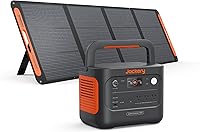
The best Jackery portable power stations include the Jackery Explorer 300 Portable Power Station for lightweight camping, the Jackery Explorer 1000 v2 Portable Power Station for flexible backup, and the BLUETTI Elite 30 V2 Portable Power Station for compact UPS backup.
On this page (15 sections)
- Which Jackery power station is best for each use?
- How we ranked the best Jackery power stations
- 1. Jackery Explorer 300 Portable Power Station: Best for lightweight camping
- 2. Jackery Explorer 1000 v2 Portable Power Station: Best for flexible backup
- 3. BLUETTI Elite 30 V2 Portable Power Station: Best for compact UPS backup
- 4. Anker SOLIX C300 Portable Power Station: Best for port variety
- 5. Westinghouse iGen400s 400 Watt: Best for small indoor backup
- 6. Jackery HomePower 3600 Plus Power Station: Best for large home backup
- 7. Jackery HomePower 3000 Portable Power Station: Best for essential outage loads
- 8. Jackery Generator 1000 v2 with 200W Panel: Best Jackery solar bundle
- How much power do you need from a Jackery Explorer generator?
- Is a Jackery Explorer Plus or HomePower better for outages?
- Can a portable power station charge an electric vehicle?
- Jackery power station care and setup
- Verdict: which are the best Jackery power stations?
The best Jackery power station for most portable backup needs is the Jackery Explorer 1000 v2, with 1,070Wh capacity, 1,500W output and a foldable handle. Choose the Explorer 300 for lighter carry, the Jackery Generator 1000 v2 bundle for included solar charging, or HomePower for larger household loads.
We compared the listed capacity, output, charging methods, port selection, size and intended use. The score also weighs how well each model fits the search for the best Jackery power stations, not just the largest battery.
For a broader explanation of battery size, output and charging, start with our guide to the best portable power station. If you're comparing a smaller Explorer model, our Jackery Explorer 500 review adds another reference point.
Our picks at a glance
-
1
 Best for lightweight camping
Jackery Explorer 300 Portable Power Station
9.6/10 our score
See it on Amazon -
2
 Best for flexible backup
Jackery Explorer 1000 v2 Portable Power Station
9.5/10 our score
See it on Amazon -
3
 Best for compact UPS backup
BLUETTI Elite 30 V2 Portable Power Station
9.3/10 our score
See it on Amazon
- 4
 Check it
Anker SOLIX C300 Portable Power Station
Best for port variety - 5
 Check it
Westinghouse iGen400s 400 Watt
Best for small indoor backup - 6
 Check it
Jackery HomePower 3600 Plus Power Station
Best for large home backup - 7
 Check it
Jackery HomePower 3000 Portable Power Station
Best for essential outage loads - 8
 Check it
Jackery Generator 1000 v2 with 200W Panel
Best Jackery solar bundle
Which Jackery power station is best for each use?
The Explorer 1000 v2 is the best all-around choice for one station to cover camping, road trips and short outages. Its 1,070Wh capacity and 1,500W output give it far more room than a small unit for running several devices at once.
The Explorer 300 is easier to carry at 7.5 lb, so it suits day trips and light camping kits where weight matters more than runtime. Its 292Wh battery and 300W output are better matched to laptops, cameras, drones and phones than to larger appliances.
The HomePower models are better suited to high-load home backup because they offer 3,600W output and around 3,000Wh or more of capacity. That step up helps with household essentials, but you should plan where the unit will live and how it will be moved.
The right pick depends on your device wattage, desired runtime and how often you need to move the station. If you mainly charge small electronics on the move, a lighter model is simpler to use.
If you expect to run a fridge, fan and router together during an outage, the larger output and capacity are easier to justify. Check the running watts for everything you plan to use at the same time before you decide.
Runtime matters as much as output, because a station that can start a device may still drain quickly under a heavy load. Think about whether your priority is a short charge for phones or longer backup for home equipment.
For many buyers, the middle option lifts daily limits without turning every trip into a heavy carry. That is why the Explorer 1000 v2 sits in the middle of this group in size, output and weight.
How we ranked the best Jackery power stations
We ranked these products by matching their stated specifications with common portable charging and backup needs. Capacity helps estimate runtime, output helps determine which devices can run, and weight matters when the station travels.
We also looked at how power is delivered, because many port types can suit mixed loads more easily. AC outlets help with larger household items, while USB ports suit phones, tablets and laptops without extra adapters.
Charging options played a part too, since a station is only useful if you can refill it where you use it. Wall charging is fastest for most people, while solar and car charging help when you are away from home.
A useful runtime estimate starts with watt-hours divided by device watts, then allows for conversion losses and the station's own power use. Actual runtime changes with the device, load pattern and charging method.
For example, a small device drawing 60W will not get the same result as a larger appliance drawing several hundred watts, even from the same battery. Start-up demand can also pull more power for a short time, especially with motors or compressors.
That is why output and capacity need to be read together rather than on their own. A compact station may charge a laptop well, yet struggle with a kitchen appliance that needs a much higher continuous draw.
We gave more credit to models that explain their limits clearly and support the loads they claim to handle. Clear port counts, stated surge ratings and charging times make it easier to match a station to real use.
For solar use, check voltage, connector and brand compatibility before buying a panel. Our guide to portable power station solar charging explains the basic setup and charging trade-offs.
Compatibility matters because a panel that works with one station may not charge another correctly. Checking the input range first is safer than relying on panel wattage alone.
We also weighed form factor, battery chemistry and cycle life, since a lighter station is more likely to be used often and kept for years. Score order reflects how well each model fits its likely use, from lightweight carry through to essential household backup.
| Product | Best for | Capacity | Output | Weight | Our score |
|---|---|---|---|---|---|
| Jackery Explorer 300 Portable Power Station | lightweight camping | 292Wh | 300W rated, 600W peak | 7.5 lb | 9.6 |
| Jackery Explorer 1000 v2 Portable Power Station | flexible backup | 1,070Wh | 1,500W | 23.8 lb | 9.5 |
| BLUETTI Elite 30 V2 Portable Power Station | compact UPS backup | 288Wh | 600W | 9.5 lb | 9.3 |
| Anker SOLIX C300 Portable Power Station | port variety | 288Wh | 300W | 4.13 kg | 9.1 |
| Westinghouse iGen400s 400 Watt | small indoor backup | 183Wh | 200W running, 400W peak | 5 lb | 9.0 |
| Jackery HomePower 3600 Plus Power Station | large home backup | 3,584Wh | 3,600W | 77.2 lb | 8.9 |
| Jackery HomePower 3000 Portable Power Station | essential outage loads | 3,072Wh | 3,600W | 59.5 lb | 8.8 |
| Jackery Generator 1000 v2 with 200W Panel | Jackery solar bundle | 1,070Wh | 1,500W | 8.1 |
1. Jackery Explorer 300 Portable Power Station: Best for lightweight camping
Jackery Explorer 300 Portable Power Station: Best for lightweight camping
- 292Wh capacity
- 300W output and 600W peak
- 7.5 lb weight
- 2 AC outlets
The Explorer 300 keeps the weight low while offering AC, USB and car charging ports. It suits laptops, cameras, drones and other devices below its 300W total limit.
Pros
- Lightweight design
- LiFePO4 battery
- Solar charging support
Cons
- Lower output than the larger Jackery models
- Solar panel sold separately
The Jackery Explorer 300 is the lightest straightforward choice in this group. Its 292Wh capacity and 7.5 lb weight fit day trips, camping kits and travel where a larger battery would add unnecessary bulk.
Its 300W rated output can handle devices such as laptops, drones and cameras when their combined draw stays below the station's limit. The 600W peak gives extra room for short startup demands, but high-draw appliances need a larger model.
You get 2 AC outlets, a 100W USB-C PD port, 2 USB-A ports and a 120W car port. The Explorer 300 can charge devices while it recharges, and it supports AC, car and Jackery solar charging.
Jackery says the LiFePO4 battery can provide more than 4,000 cycles before reaching 70% capacity. The AC adapter, car charger cable and user guide are included, while the solar panel is not.
Choose it when low weight matters most. For a larger Explorer model, compare it with our Jackery Explorer 1500 v2 review.
2. Jackery Explorer 1000 v2 Portable Power Station: Best for flexible backup
Jackery Explorer 1000 v2 Portable Power Station: Best for flexible backup
- 1,070Wh capacity
- 1,500W output and 3,000W surge
- 1-hour emergency charging
- 3 AC outlets
The Explorer 1000 v2 balances capacity, output and portability for camping, road trips and emergencies. Its app controls charging modes, including emergency, quiet and energy-efficiency settings.
Pros
- High output for its weight
- LFP battery
- Smart app control
Cons
- Jackery solar panels only for solar charging
- Solar panel not included
The Jackery Explorer 1000 v2 is the best balance of battery size, power and portability in this roundup. Its 1,070Wh battery and 1,500W output give it more room for emergency electronics and outdoor appliances than the Explorer 300.
The 3,000W surge rating helps with short startup demands, while 3 pure sine wave AC outlets, 2 USB-C ports, 1 USB-A port and 1 DC car port let you charge several devices at once. LED lights add a simple option for low-light situations.
The Jackery App controls emergency charging, quiet overnight charging and energy efficiency mode. Emergency charging can take the station from 0% to 100% in 1 hour, while the default charge time is 1.7 hours to support battery health.
This model weighs 23.8 lb and has a foldable handle. Jackery says the LFP battery retains over 70% capacity after 4,000 cycles.
Solar charging works only with Jackery solar panels, and the panel is not included.
Choose this Explorer power station for mixed camping, road-trip and outage needs. Pick the bundled version below if you want a 200W panel included.
3. BLUETTI Elite 30 V2 Portable Power Station: Best for compact UPS backup
BLUETTI Elite 30 V2 Portable Power Station: Best for compact UPS backup
- 288Wh capacity
- 600W output and 1,500W lifting power
- 10ms UPS
- 380W wall charging
The Elite 30 V2 offers more continuous output than most small power stations in this group. Its 10ms UPS mode suits laptops, routers and CPAP machines during short power interruptions.
Pros
- 600W continuous output
- 10ms UPS switching
- 8 charging modes
Cons
- Smaller capacity than the Explorer 1000 v2
- Solar charging cable needs vary by panel
The BLUETTI Elite 30 V2 is a strong compact alternative when continuous output and UPS switching matter more than brand matching. Its 288Wh battery provides 600W output, with Power Lifting Mode reaching 1,500W for compatible loads.
For background on where BLUETTI power stations are made, see our brand guide.
The 10ms UPS function suits devices that need quick backup during a power cut, including laptops, routers and CPAP machines. Its 9.5 lb body remains small enough for camping, road trips and emergency storage.
This model supports AC charging up to 380W, car charging, solar, lead-acid battery charging and combined AC plus solar charging. BLUETTI says it can reach 80% in 45 minutes and 100% in 70 minutes through its fast wall-charge setup.
The Elite 30 V2 includes an AC charging cable, car charging cable and user manual. It also supports app control through Bluetooth or Wi-Fi.
If you need the highest capacity here, the Explorer 1000 v2 is a better fit.
4. Anker SOLIX C300 Portable Power Station: Best for port variety
Anker SOLIX C300 Portable Power Station: Best for port variety
- 288Wh capacity
- 300W output and 600W surge
- 8 charging ports
- 140W two-way USB-C
The SOLIX C300 packs AC, car, USB-C and USB-A connections into a compact design. It suits phones, laptops, cameras and drones when you need several charging options.
Pros
- Eight charging ports
- 140W USB-C
- 25dB operation
Cons
- Solar panel compatibility is specific
- Shoulder strap sold separately
The Anker SOLIX C300 stands out for its 8 charging ports in a compact design. It has 3 AC outlets with 300W total output, a 120W car socket, 2 USB-C ports rated at 140W each, another USB-C port and a USB-A port.
Its 288Wh capacity and 300W output suit phones, laptops, cameras and drones. The 600W surge rating provides short-term headroom, but this is still a compact station rather than a high-load appliance backup unit.
Anker says the C300 can reach 80% in 50 minutes from a wall outlet. It also supports car, solar and PD 3.1 USB-C charging, with recommended 60W or 100W Anker solar panels.
Solar compatibility needs careful checking. The C300 uses 11–28V solar input with an XT60 connector and is not compatible with the Anker SOLIX PS30, PS200 or PS400 panels.
The AC cable, safety manual and warranty information are included, but the shoulder strap is not.
For outdoor setup ideas with a different brand, see our guide to Anker SOLIX outdoor use.
5. Westinghouse iGen400s 400 Watt: Best for small indoor backup
Westinghouse iGen400s 400 Watt: Best for small indoor backup
- 183Wh capacity
- 200W running and 400W peak
- 9 outlets
- Tri-mode flashlight
The iGen400s is a small battery power station for phones, laptops, lights and other modest loads. Its display, flashlight and indoor, fume-free operation fit apartment outages and travel.
Pros
- Lightweight 5 lb design
- Nine connection options
- LED display
Cons
- Lowest capacity in this roundup
- No AC power adapter included
The Westinghouse iGen400s is the smallest-capacity pick here, with 183Wh capacity, 200W running output and 400W peak output. Its 5 lb body and top handle make it useful for phones, laptops, lights and modest travel loads.
The station has 2 120V AC outlets, 3 USB-C 30W ports, a USB-C 100W port, 2 USB-A ports and a 12V DC port. An LED display shows battery level, charge time and watts out, which helps you judge remaining power.
It charges to 80% in 2 hours from a 120V outlet when paired with a 100W AC power adapter. The included USB-C cable and car charger adapter support the setup, but no AC power adapter is included.
Westinghouse includes overcharge, overload, overheating and low-voltage protection. The tri-mode flashlight and emergency flasher add useful light during an outage.
Choose this model when portability and simple indoor backup matter more than long runtime.
6. Jackery HomePower 3600 Plus Power Station: Best for large home backup
Jackery HomePower 3600 Plus Power Station: Best for large home backup
- 3,584Wh capacity
- 3,600W output
- 120V and 240V in parallel
- Wheels and telescopic handle
The HomePower 3600 Plus is designed for high-load home backup, with 3,600W output and a 3,584Wh battery. Wheels and a telescopic handle make its 77.2 lb weight easier to move.
Pros
- High output
- Large capacity
- Four charging options
Cons
- Heavy compared with portable models
- Home transfer setup needs planning
The Jackery HomePower 3600 Plus is the largest-capacity option here, with 3,584Wh capacity and 3,600W output. It is designed for home backup loads such as pumps, heaters and dryers rather than casual day trips.
Jackery says the system can provide 120V and 240V power in parallel, with output reaching 7,200W in parallel. Its capacity can expand to 21kWh per unit or 43kWh with multiple units, according to the stated product information.
The station weighs 77.2 lb, so carrying it like a small Explorer is not realistic. Its wheels and telescopic handle make rolling it from a kitchen to a garage more practical.
Four charging methods are listed: hybrid AC plus DC, AC, solar and a gas generator. Jackery states recharge times of 2 hours through hybrid AC plus DC, 2.5 hours through AC, 4 hours through solar and 2.5 hours through a gas generator.
Choose it for larger household backup where high output and long runtime matter most. Plan the placement and any transfer setup before buying.
7. Jackery HomePower 3000 Portable Power Station: Best for essential outage loads
Jackery HomePower 3000 Portable Power Station: Best for essential outage loads
- 3,072Wh capacity
- 3,600W output and 7,200W surge
- 20ms UPS
- TT-30 RV port
The HomePower 3000 focuses on household essentials such as refrigerators, fans, routers and lights. Its UPS mode, RV port and multiple charging methods broaden its backup use.
Pros
- Large battery capacity
- UPS under 20ms
- RV port
Cons
- Heavy for travel
- Solar panels sold separately
The Jackery HomePower 3000 targets essential household backup with 3,072Wh capacity and 3,600W output. It can support loads such as a refrigerator, fan, Wi-Fi router and lights, with a stated runtime of up to 15 hours for household use.
Its 7,200W surge rating gives more startup headroom than the portable Explorer models. The station also includes a TT-30 RV port, dual 100W USB-C ports and AC, USB-A and DC connections.
A UPS switches within 20ms for supported essentials such as security cameras, medical refrigerators, video calls and pet feeders. That timing can help reduce interruption, but confirm that your specific equipment accepts this type of backup.
The HomePower 3000 recharges through hybrid AC and DC, AC, solar, a 12V car charger or a gas generator. Jackery says two 200W SolarSaga panels can charge it to 80% in 9 hours.
At 59.5 lb, this is a roll-and-place backup unit rather than a light camping station. Choose it when home essentials and RV use matter more than easy carrying.
8. Jackery Generator 1000 v2 with 200W Panel: Best Jackery solar bundle
Jackery Generator 1000 v2 with 200W Panel: Best Jackery solar bundle
- 1,070Wh capacity
- 1,500W output and 3,000W surge
- 200W solar panel included
- App charging controls
This bundle pairs the Explorer 1000 v2 with a 200W solar panel. It makes sense when you want the same capacity and output as the Explorer 1000 v2 with solar equipment included.
Pros
- Solar panel included
- 1,500W output
- LFP battery
Cons
- Heavier than the Explorer 300
- Higher score reflects bundle fit, not a different station
The Jackery Generator 1000 v2 bundle combines the Explorer 1000 v2 power station with a 200W solar panel. It provides 1,070Wh capacity, 1,500W output and a 3,000W surge rating, matching the standalone Explorer 1000 v2 in the core power figures.
The station includes 3 pure sine wave AC outlets, 2 USB-C ports including 100W PD, 1 USB-A port, 1 DC car port and LED lights. The foldable-handle design weighs 23.8 lb, so it remains usable for camping, road trips and emergency storage.
Jackery's App offers 1-hour emergency charging, quiet overnight mode at 30 dB and energy efficiency mode. The LFP battery is designed to retain over 70% capacity after 4,000 charge cycles.
The key advantage is setup convenience. You receive the Explorer 1000 v2, 200W solar panel, AC charging cable and user manual together.
Choose this bundle when you want solar charging included and do not need the much larger HomePower capacity.
How much power do you need from a Jackery Explorer generator?
Choose a Jackery Explorer generator by checking both device wattage and battery capacity. The Explorer 300 provides 300W rated output, while the Explorer 1000 v2 provides 1,500W, so they suit very different loads even though both are portable.
Add the running watts of devices you expect to use together. Then check startup requirements for devices with motors or compressors, such as refrigerators.
A station's peak rating helps with short surges, but it does not replace enough continuous output.
For runtime, divide the available watt-hours by the device's watts as a rough starting point. A 60W device connected to a 292Wh station will not run for the full 4.8 hours because conversion losses and the station's own use reduce the practical result.
Is a Jackery Explorer Plus or HomePower better for outages?
The Jackery Explorer Plus family is better when you need a station you can lift, store and use in several places. HomePower models are better when you need several kilowatt-hours of capacity and 3,600W output for household essentials.
The HomePower 3000 and HomePower 3600 Plus weigh 59.5 lb and 77.2 lb. Their wheels or handles help with movement, but they need a planned storage location.
The Explorer 1000 v2 weighs 23.8 lb and is easier to move between a vehicle, campsite and home.
Do not choose by capacity alone. Consider the appliances you need during an outage, how long you want them powered, where the station will sit and how you will recharge it.
Can a portable power station charge an electric vehicle?
A portable power station usually cannot replace a full EV charging setup because EV batteries are much larger than the batteries in these stations. Read our guide to portable power station for EV charging before planning an emergency charging method.
The scale difference is the main issue, since even a large home backup station holds far less energy than a vehicle battery. A portable station may help charge small electronics during a trip, but it is not a practical way to add meaningful range to a car.
Output is the second limit, because EV charging needs sustained power rather than a brief surge. A station rated at 1,500W or 3,600W is designed for household and camping loads, not for a full vehicle charge.
For small electronics and travel, the Explorer 300, Explorer 1000 v2 and Jackery Generator 1000 v2 offer more practical scale. They can keep phones, laptops, cameras and lights running when wall power is not available.
The Explorer 300 is the lightest option at 292Wh, which suits small devices best for a short trip. The Explorer 1000 v2 has more capacity and higher output for larger camping loads, but it still does not turn it into an EV charger.
For household loads, the HomePower models provide more capacity but still need a careful check of the intended connection and load. Before relying on any station in an emergency, check total watts and how long you need devices to run.
If your goal is to support a vehicle, a dedicated EV charging method is the safer starting point. A portable station is better treated as backup for home, camping and travel electronics.
Jackery power station care and setup
Keep the station dry, use the charging method and panel compatibility intended for that model, and check total wattage before connecting devices. Leave access around the unit so cables do not bend sharply and controls remain easy to reach.
Good airflow matters during charging and use, so avoid packing items tightly around the vents or ports. That helps the unit work within its intended conditions and keeps controls easy to find in low light.
Recharge before a planned trip or storm, then store the station according to the brand's instructions. Test the display, cables, ports and charging setup before you need backup power.
A short test before a trip can show whether a cable is missing, a port is dirty or a panel connector does not fit. It is easier to sort those small issues at home than at a campsite or during an outage.
Check the battery level after storage as well, because a station that has sat unused may not be ready for immediate use. Topping it up before you need it takes the guesswork out of a busy day.
For solar charging, place the panel where it receives direct sun and confirm the input range first. Shade, clouds and panel angle affect charging time, so solar is best treated as replenishment rather than a guaranteed fixed schedule.
Keep panel cables clear of sharp bends and avoid running them across walkways where they could be tripped over. A tidy setup also makes it easier to disconnect and pack everything away quickly.
When using the station indoors, keep it away from water and follow the guidance for the space you are using it in. Fume-free operation helps with indoor backup, yet the unit still needs a dry and stable surface.
For larger HomePower models, plan the route you will use to move them before the day arrives. Wheels and handles help, but the weight means a clear path and a firm surface make setup safer.
Label the cables you use most often, store the manual and adapters with the station, and keep ports free of dust after each use. That small care makes the next setup faster and reduces the chance of using the wrong connector.
Verdict: which are the best Jackery power stations?
The Jackery Explorer 1000 v2 is the best all-around choice for portable charging and emergency use. Pick the Explorer 300 when low weight matters most, or the Jackery Generator 1000 v2 bundle when you want the 200W panel included.
Choose the HomePower 3000 or HomePower 3600 Plus for larger home backup loads. If you need compact UPS support, the BLUETTI Elite 30 V2 is the strongest small alternative, while the Anker SOLIX C300 is the better choice for port variety.
For another large-capacity comparison, see our best EcoFlow power station guide and the EcoFlow RIVER 2 Pro review.
Our top 3 picks at a glance
-
1
Best for lightweight camping
Jackery Explorer 300 Portable Power Station
9.6/10 our score
See it on Amazon -
2
Best for flexible backup
Jackery Explorer 1000 v2 Portable Power Station
9.5/10 our score
See it on Amazon -
3
Best for compact UPS backup
BLUETTI Elite 30 V2 Portable Power Station
9.3/10 our score
See it on Amazon
Frequently asked questions
What is the best Jackery power station for most people?
The Jackery Explorer 1000 v2 is the strongest general choice here because it combines 1,070Wh capacity, 1,500W output and a 23.8 lb body. It fits camping, road trips and emergency use better than the smaller Explorer 300, while remaining easier to move than the HomePower models.
What is the difference between a Jackery Explorer and HomePower station?
Jackery Explorer models in this roundup focus on portable power, with capacities from 292Wh to 1,070Wh. HomePower models are larger backup units with 3,072Wh or 3,584Wh capacity and 3,600W output, so they suit household essentials more than short trips.
Can a Jackery power station run a refrigerator?
The Explorer 1000 v2 has 1,500W output and Jackery says it can power refrigerators. The HomePower 3000 and HomePower 3600 Plus offer 3,600W output for larger backup needs.
Check your refrigerator's running and startup wattage before choosing.
Are Jackery solar panels included?
Most Jackery power stations here do not include a solar panel. The Jackery Generator 1000 v2 bundle includes a 200W panel, while the Explorer 300, Explorer 1000 v2, HomePower 3000 and HomePower 3600 Plus list solar panels as optional.
How do you choose the right Jackery power station size?
Choose by both watt-hours and watts. Watt-hours affect how long devices can run, while output watts determine whether the station can start and operate them.
Add the running wattage of devices used together, then allow room for startup surges.