Is a Solar Generator a Battery?
A solar generator is not just a battery. It is a portable power system that combines a battery, inverter, charging hardware, and sometimes solar panels in one setup.
On this page (8 sections)
- What makes a solar generator different from a battery?
- How do the battery, inverter, and panels work together?
- Are solar generator batteries rechargeable?
- Can a solar generator power a house?
- What is the difference between solar generator batteries and fuel generators?
- Can you use a solar generator as a UPS?
- How should you choose a solar generator battery?
- So, is a solar generator a battery?
A solar generator is a battery-based power system, not a battery by itself. It combines stored energy, an inverter, charging controls, and output ports so you can run or charge devices away from a wall outlet.
The battery stores energy in watt-hours. The inverter changes the battery's DC electricity into AC power for compatible household devices.
Solar panels, when included or connected separately, recharge the battery instead of creating power for the system on their own.
What makes a solar generator different from a battery?
A battery only stores energy, while a solar generator stores, converts, and delivers energy. The extra parts make it possible to connect devices through AC outlets, USB ports, or a vehicle-style port.
A standalone battery may need separate equipment before it can power an AC device. A solar generator usually places the battery, inverter, charging hardware, and controls inside one portable enclosure.
The battery's capacity is measured in watt-hours, or Wh. A larger Wh number generally gives you more stored energy, but actual runtime also depends on the device's power draw and conversion losses.
The inverter's output is measured in watts. A system with enough battery capacity can still shut down if the connected devices need more watts than the inverter can supply.
For a broader look at this equipment, see our guide to portable power stations.
How do the battery, inverter, and panels work together?
The battery stores energy, the inverter supplies usable AC power, and the solar panels recharge the battery. These parts work as one system, but each has a different job.
A simple operating cycle looks like this:
- Solar panels send electrical energy into the charging system.
- The charging system stores that energy in the internal battery.
- The inverter changes stored DC power into AC power when needed.
- The output ports send power to your connected devices.
- The battery level falls as those devices use energy.
Solar panels do not usually replace the battery. They provide input power, while the battery helps supply a steadier output when sunlight changes or disappears.
A solar generator can often charge from more than one source. Depending on the model, those sources may include a wall outlet, a vehicle port, or a compatible solar panel.
Are solar generator batteries rechargeable?
Yes, solar generator batteries are rechargeable storage cells. You can recharge them from solar input when supported, or from another approved power source such as an AC adapter or car port.
Recharge time depends on the battery size, charger or panel wattage, sunlight, and the charging system. A panel's advertised wattage does not mean it will produce that amount continuously in every outdoor condition.
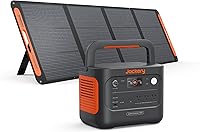
The Jackery Explorer 300 Portable Power Station has a 292Wh capacity, 300W rated output, and 600W peak surge output. For another brand's options, compare the best Bluetti solar generators.
It includes 2 AC outlets, a 100W USB-C PD port, 2 USB-A ports, and a 120W car port.
The Explorer 300 can charge from a car port or a compatible Jackery solar panel. The solar panel is not included, so plan for that extra component if you want a complete solar charging setup.
Its 300W rated output suits devices that stay within that limit. Check each device's wattage before connecting it, especially when several devices will run at the same time.
Can a solar generator power a house?
A small solar generator is usually for selected devices, not an entire home. For household-wide backup, see our guide to whole home battery backup systems.
You need enough inverter output for the devices running at the same time and enough battery capacity for the desired runtime.
A compact unit may suit phones, cameras, laptops, lights, or other modest loads. Larger systems can support more demanding equipment, but the exact output and battery capacity still control what you can run.
Compare solar generators for home backup when you need to power household devices.
Look at running watts and startup watts. Some devices, such as motor-driven appliances, need extra power when they start.
A system that handles the normal running load may still be too small for the startup demand.
For help matching capacity to your devices, read what size solar generator you need.
A fuel generator is a different type of power source. It creates electricity from an engine rather than storing electricity in a rechargeable battery.
The Westinghouse 12500 Watt Dual Fuel Home Backup Portable Generator produces up to 12,500 peak watts and 9,500 running watts on gasoline. On propane, it produces 11,200 peak watts and 8,500 running watts.
This Westinghouse model runs on gasoline or propane and has remote, electric, and recoil starting. It has a 6.6-gallon fuel tank, a fuel gauge, and up to 12 hours of runtime on gasoline.
Its outlets include household receptacles, a transfer-switch-ready 120V L14-30R outlet, and an RV-ready 120/240V 14-50R outlet. It also includes a 12V battery charger, oil, an oil funnel, a tool kit, and a user manual.
It is fuel powered, so it does not recharge from solar panels as a solar generator does. Use it only in a safe outdoor location and follow the manufacturer's instructions for operation and connections.
What is the difference between solar generator batteries and fuel generators?
Solar generator batteries store power before you need it, while fuel generators make power while their engines run. That difference affects noise, emissions, runtime, refueling, and setup.
Battery-based systems are generally useful when you want quiet power for electronics, short outages, travel, or camping. Their runtime ends when the battery is depleted unless you can recharge it.
Fuel generators can continue operating as long as you have the correct fuel and follow safe operating practices. They can also offer higher output, but they require engine maintenance, fuel storage, and outdoor operation.
Our comparison of inverter generator vs solar generator explains the main trade-offs between these two approaches.
The WEN Super Quiet 2350-Watt Portable Inverter Generator produces 2,350 surge watts and 1,900 rated watts from gasoline. It weighs 39 lb and includes 2 three-prong 120V receptacles, 1 12V DC receptacle, and 2 USB ports.
The WEN uses a 4-stroke, 79cc engine and has a fuel shutoff that uses remaining carburetor fuel before shutdown. It is designed for clean power for devices such as phones, tablets, televisions, and computers.
Its gasoline engine means it is not a solar generator or a solar generator battery. It may suit camping, tailgating, or backup use where fuel-powered output is more useful than stored battery energy.
Can you use a solar generator as a UPS?
Some solar generators can provide backup power, but you should confirm that the model supports the required pass-through or UPS function. A normal battery station is not automatically a UPS for every computer or appliance.
A UPS is designed to keep connected equipment powered when utility power fails, often with a fast transfer to battery power. A solar generator may have an AC output and a battery, but those details alone do not confirm UPS performance.
For the transfer process, read how a UPS battery backup switches to battery power. If you are comparing terms, the difference between a UPS and a battery backup can also help.
Check the manufacturer's instructions for transfer time, supported loads, charging behavior, and whether the unit is suitable for sensitive equipment. Don't connect a solar generator to home wiring unless the system and installation method are designed for that use.
How should you choose a solar generator battery?
Choose by watt-hours, inverter watts, charging options, output ports, and the devices you need to run. Start with your actual loads instead of choosing only by the word “generator.”
Use this process:
- List the devices you want to run.
- Add their running wattage.
- Check for startup surges from motors or compressors.
- Estimate how many hours each device needs power.
- Compare the total with the system's watt and Wh ratings.
- Confirm the available charging methods and included accessories.
For outdoor use, also consider weight, handles, storage space, and how you will protect the unit from moisture. Our guide to using an Anker SOLIX power station outdoors covers practical outdoor planning.
If you want panels included with a portable setup, compare the best portable solar power stations and check exactly what comes in each package.
So, is a solar generator a battery?
A solar generator includes a battery, but it is more than a battery. The battery stores energy, the inverter makes that energy usable for AC devices, and solar panels provide a way to recharge the system.
Choose the Jackery Explorer 300 for a compact battery system for smaller loads. Choose the WEN when gasoline-powered inverter output better fits your needs.
Choose the Westinghouse when residential backup calls for much higher fuel-powered output.
A solar generator guide can help you compare battery capacity, inverter output, panel input, and device runtime before you choose.
Frequently asked questions
Is a solar generator the same as a battery?
No. A battery stores electrical energy, while a solar generator combines battery storage with an inverter, charging controls, and output ports.
Some systems include solar panels, while others let you connect panels separately.
The battery is one part of the complete solar generator.
Can a solar generator work without solar panels?
Yes. Many portable power stations can charge from a wall outlet or a vehicle port, then power devices later from the internal battery.
Solar panels add another charging method, but they may be optional.
Check the system's charging inputs and panel compatibility before you buy.
What is inside a solar generator?
A solar generator usually includes a rechargeable battery, an inverter, charging circuitry, control electronics, and output ports. A portable model may also support solar input.
The battery stores energy, the inverter changes it into usable AC power, and the ports connect your devices.
Is a solar generator better than a fuel generator?
A solar generator is usually quieter and does not need gasoline or propane while it is running. A fuel generator can provide longer continuous power when you have fuel available and may support higher loads.
Your choice depends on wattage needs, runtime, noise, storage, and how you plan to recharge.